Check official Shawnee National Forest pages for current alerts, closures, fees, and trail conditions before you go. This site is not a substitute for Forest Service information.

Visiting the Area

The eastern Shawnee sits among small Illinois towns, river bluffs, and farm country. Use this page for nearby communities, seasonal timing, safety, and a few rules that catch first-time visitors.

Nearby towns

These communities sit close to the eastern and Ohio River side of the forest. Services change; call ahead if you are counting on a store or office being open.

Harrisburg

Harrisburg is the main northern gateway and the home of the Shawnee National Forest Supervisor’s Office at 50 Highway 145 South (618-253-7114). The office is open Monday through Friday, 8:00 a.m. to 4:30 p.m., closed 11:30 a.m. to 12:30 p.m. and on federal holidays. America the Beautiful passes are available there during office hours. From town, Forest Service directions to Garden of the Gods head south on Highways 145 and 34.
Herod

Herod is a small community in Pope County along the approach to the eastern forest, in the same general area as Highway 34 and the Garden of the Gods / Karbers Ridge country. It is a handy name to know on the map when you are heading into the Shawnee Hills, but it is not a full-service town. Plan to get fuel, maps, and groceries in a larger community such as Harrisburg.

Elizabethtown

Elizabethtown is an Ohio River town in Hardin County. The River to River Trail Society, which the Forest Service points to for detailed trail maps, treats Elizabethtown as a starting point for mileage along the 160-mile River to River Trail. It is a natural place to begin or end an Ohio River-side trip, and it sits along the Ohio River National Scenic Byway.

Golconda

Golconda, the Pope County seat, is another Ohio River town near the eastern forest. Like Elizabethtown, it is a useful river community when you are traveling the scenic byway or looking for a place to pause between forest roads and the river. Combined with Harrisburg to the north, these towns frame many visits to Garden of the Gods, Pounds Hollow, and Camp Cadiz.

The Forest Service also recommends the Ohio River National Scenic Byway and the Great River Road for drives that mix Shawnee hills, farmland, small towns, state parks, and local shops.

When to go

You can visit the forest in every season, but the feel of the trip changes:

  • Spring — Wildflowers and stronger stream flow. Creek crossings at places such as Bell Smith Springs can be calf-deep or more. Canyon trails may be wet and slick.
  • Summer — Designated beaches at Pounds Hollow and Lake Glendale are typically in season (Lake Glendale’s beach is listed Memorial Day through Labor Day). Carry extra water. Insects are more noticeable than in fall.
  • Autumn — Fall color and fewer insects, a combination the Forest Service highlights at Garden of the Gods and other sites. Popular overlooks and areas such as Jackson Falls can be busier. Little Grand Canyon is called out as especially beautiful in October (and in April).
  • Winter — Some campgrounds, including Pharaoh, Camp Cadiz, and Oak Point, stay open year-round. Ice on rocks and steps makes canyon and bluff trails more serious. Daylight is short, and offices follow weekday hours only.

Hunting seasons, set by the State of Illinois, overlap much of the year. Wear blaze orange if you are hiking then, and know that hunting is prohibited within 150 yards of buildings, campsites, or developed recreation sites.

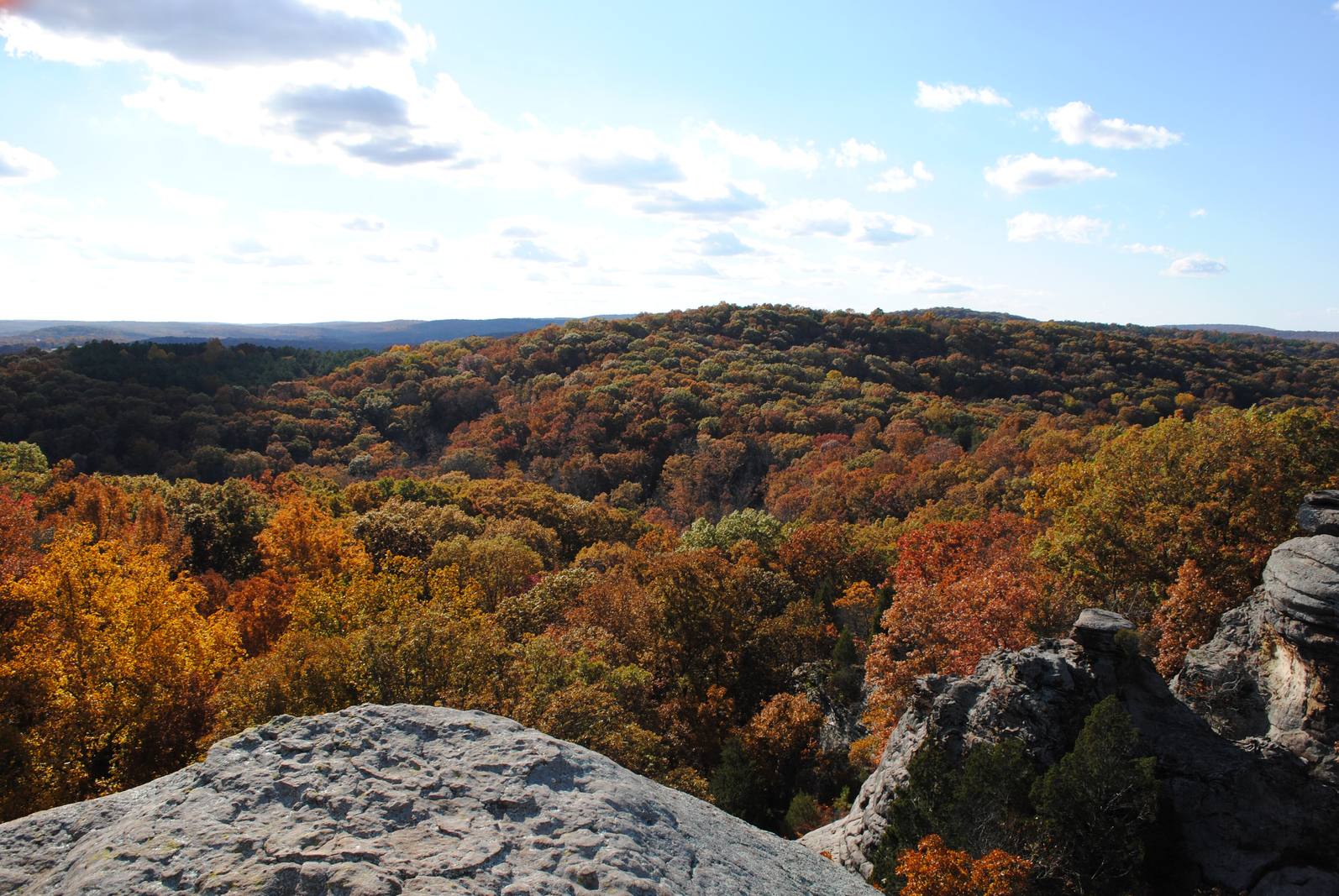
A wide autumn view of the Shawnee Hills from a Garden of the Gods overlook.
Photo: USDA Forest Service, public domain, via Wikimedia Commons. Resized for this site.

Safety

Plan and stay found

Tell someone your plans. Carry a map and compass or GPS, and do not rely on a cell phone—coverage is weak or missing in many parts of the forest, including canyons. In wilderness and other remote areas, search and rescue can be slower than in town. If you have an emergency and a signal, call 911. To report a fire, call 911 or 866-684-2051 (that line is for fires only). For non-emergency or suspicious activity, the Forest Service tip line is 618-201-3364.

Water, weather, and cliffs

Bring drinking water, or boil or filter what you collect. Streams are not a reliable source in dry spells and are not considered safe untreated. After heavy rain, rivers and some roads and trails can flood quickly and stay high for days. Sandstone bluffs and wet rocks are a serious fall hazard; stay on designated trails and well back from edges.

Wildlife

Venomous snakes in the area include rattlesnakes, copperheads, and water moccasins. The timber rattlesnake is a threatened species. Watch where you step and place your hands. Do not bother, handle, or collect snakes or other wildlife; collecting or possessing snakes is prohibited. Poison ivy is common. Ticks and insects are part of warmer months; official pages emphasize preparation rather than a specific treatment schedule.

Dogs

Dogs are welcome but must be leashed or otherwise restrained in developed recreation areas, campgrounds, picnic areas, and on developed trails. The Forest Service warns that unleashed dogs have been seriously hurt falling from bluffs. Pets are not allowed on designated beaches or in swim areas.

Cliffs and canyons deserve extra care. Garden of the Gods, Rim Rock, Jackson Falls, Bell Smith Springs, and Little Grand Canyon all have high drop-offs, uneven sandstone, or slick creek beds. Stay on the trail, keep children close, and turn back if conditions are icy or flooded.

Regulations visitors ask about

  • There is no entrance fee. Campgrounds and the Lake Glendale beach have fees. Confirm current amounts on official pages; campground payments are typically cash or check at a self-pay station.
  • Campsites and picnic shelters are first come, first served. The Forest Service does not take reservations.
  • The maximum camping stay is 14 days in one location, whether you are in a campground or dispersed camping.
  • Stay on designated trails in developed and natural areas. In wilderness, bikes, drones, and other mechanized equipment are prohibited.
  • Collecting plants or flowers for personal use is allowed on most national forest land, but not in designated wilderness or natural areas, and not for endangered or rare species. Commercial collecting needs a permit. Berries, nuts, and mushrooms may be gathered for personal use. Rockhounding has its own limits; collecting is prohibited in natural areas, archaeological sites, and developed recreation sites.
  • Firewood rules and other collection permits are explained on the official forest site. Do not cut live trees.
  • Private land is interspersed with national forest land. It is your responsibility to stay on public land.

This is a short visitor summary, not a complete legal list. The Forest Service posts orders, maps, and full regulations on its website and at bulletin boards in campgrounds.

Official safety and ethics page Current forest information

Shop local

If your route takes you through downtown Harrisburg, consider a stop at Rose Block Antiques, 111 N Main Street. It is a locally owned antiques and vintage shop in the heart of town, a short detour for visitors heading to or from the eastern forest. Stopping in town is one way to spend a little time and money in the communities that sit alongside the Shawnee.